Keep On Truckin’
Boiler, Copenhagen, Denmark
June 11 - July 3 2026
+
SPEED
Book launch
“I think that cars today are almost the exact equivalent of the great Gothic cathedrals: I mean the supreme creation of an era, conceived with passion by unknown artists, and consumed in image if not in usage by a whole population which appropriates them as a purely magical object”. - Roland Barthes, 1957
In his essay The New Citroën from the collection Mythologies (1957), the French writer and semiologist Roland Barthes describes the car as a visual myth of the twentieth century, “consumed in image if not in usage.” According to Barthes, the car as a modern phenomenon and cultural object is no longer merely a means of transportation, but is consumed through images, dreams, and imaginaries, as illustrated in the advertising imagery of the time. With its extreme smoothness and slick metal surface, the car comes to embody a modern, collective desire, onto which fantasies of superiority, status, speed, and freedom are projected.
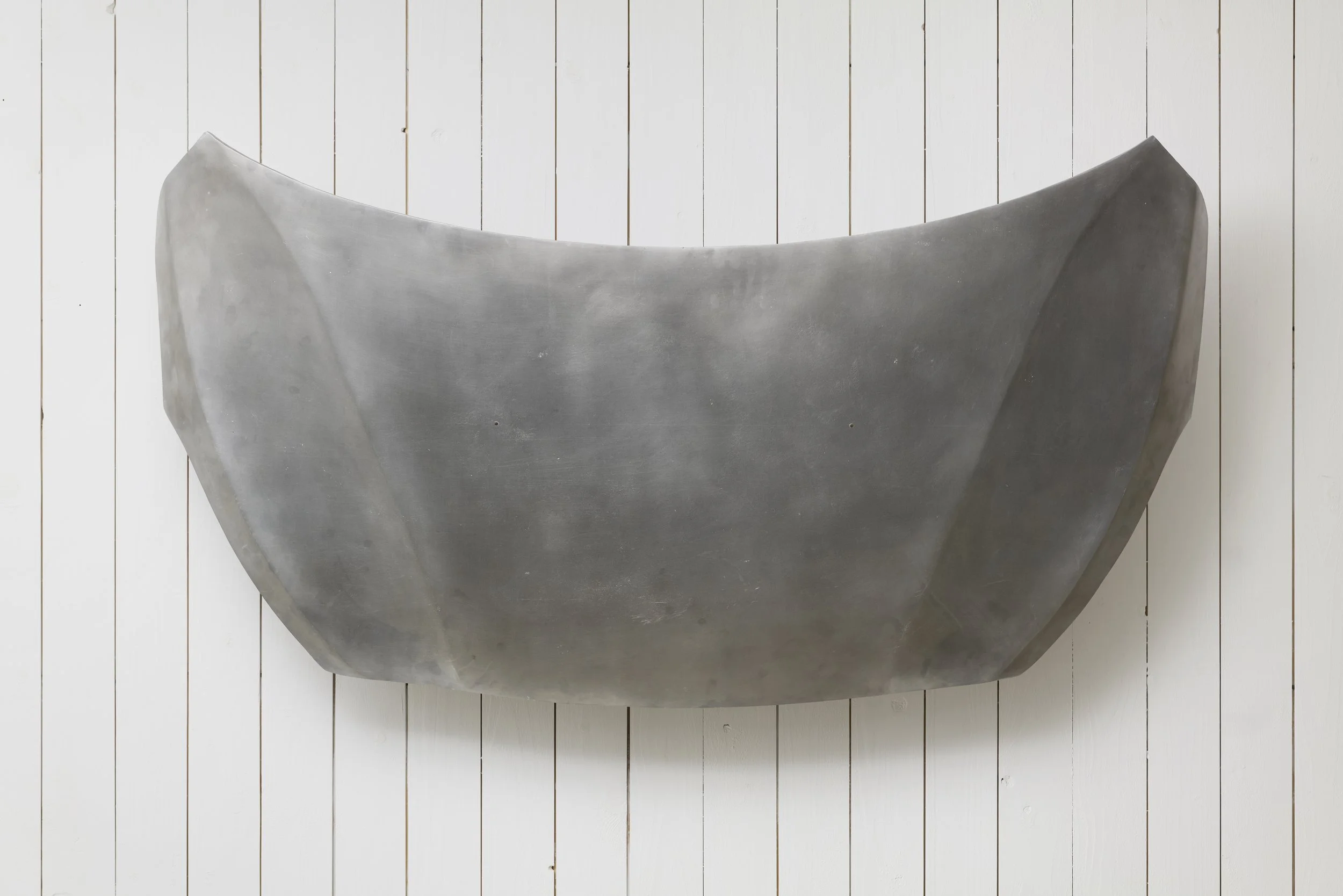
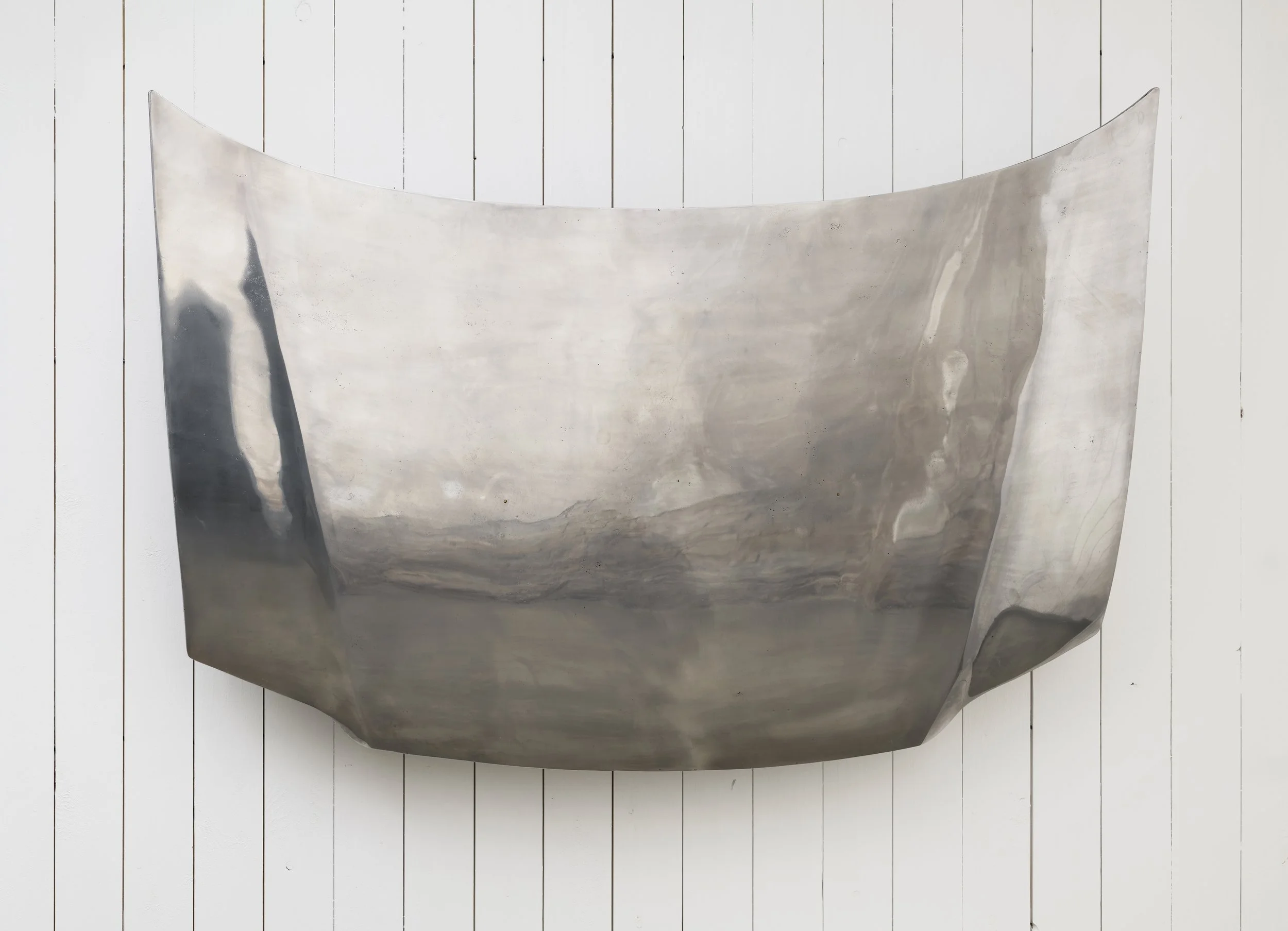
In the series FOSSILS, Kaare Golles seems to bring Barthes’ notion of myth into material form by isolating and elevating the car’s aesthetics into sculpture. The series comprises six wall-mounted “fossil” car hoods cast in aluminum, three of which are presented in the exhibition. The hoods are taken from three different car models—Volkswagen, Kia, and Toyota—and are cast in pairs with different surface finishes. In this series, the Volkswagen and Kia pairs each consist of one polished and one satin matte hood, while the Toyota pair consists of two polished hoods. While the highly polished, vibrant, mirror-reflecting hoods draw the eye and emphasize the car’s status as an object of speed and desire, the matte hoods appear more distant or patinated—almost frozen in time. In this contrast between reflection and absorption, appearance and disappearance, the work points to a shift from the car as myth and desired object in the twentieth century to the car as an exhausted form in the twenty-first century. In Golles’ work, the car no longer seems to function as a bearer of dreams and meaning, but as a remnant—a fossil—of modernity brought to a standstill.
Golles’ car hoods can be seen as part of a longer narrative in which postwar artists have engaged with the car as both form and phenomenon. The most immediate parallel that comes to mind is the American artist Richard Prince’s series Hoods (1988–2013), which focuses on America’s love affair with the automobile. To make Hoods, Prince acquired hoods from 1960s and ’70s muscle cars, often ordering them through advertisements in automotive magazines. He then altered the surfaces of these readymade objects with paint, sanding, and compositional elements. By isolating the car hood from its functional context and presenting it as a readymade, Prince reveals the car not as a vehicle of movement, but as a surface of projection. Detached from speed, use, and narrative, the hood appears as a carrier of cultural codes—an image through which desire is produced rather than fulfilled. In this sense, the work makes visible what Barthes defines as myth: a system in which historically constructed meanings appear natural and self-evident.
Where Prince exposes the myth, Golles shows that the myth has already lost its effect by staging its absence. The car’s myth of speed, freedom, and movement no longer has any functional grounding in Golles’ casts; what remains is only the frozen form of the hood, detached from its original context. The design remains recognizable, but the myth appears exhausted. Golles’ choice of Volkswagen, Kia, and Toyota can be read as a deliberate tension between European cultural history and a globalized present. While the Volkswagen carries traces of both postwar reconstruction and its ideological background, the Kia and Toyota signal a shift of industrial and cultural production away from Europe. Through casting, Golles reduces these differences to pure forms, pointing to a possible accelerating erosion of cultural meaning in contemporary times.
With their cold, smooth surfaces, Golles’ FOSSILS form a series of frozen smiles on the wall. The smallest hood, the Toyota in particular, appears diabolical in its expression, like a broad Cheshire Cat grin—the last part to vanish as the myth gradually disappears. If the car for Barthes is the 20th century’s cathedral, for Golles it appears as ruin or imprint, a Vera Icon of our time.
- Johanne Schrøder, co-founder of Boiler
Kindly supported by The Danish Arts Foundation and Ny Carlsbergfondet
Photo: Anders Sune Berg
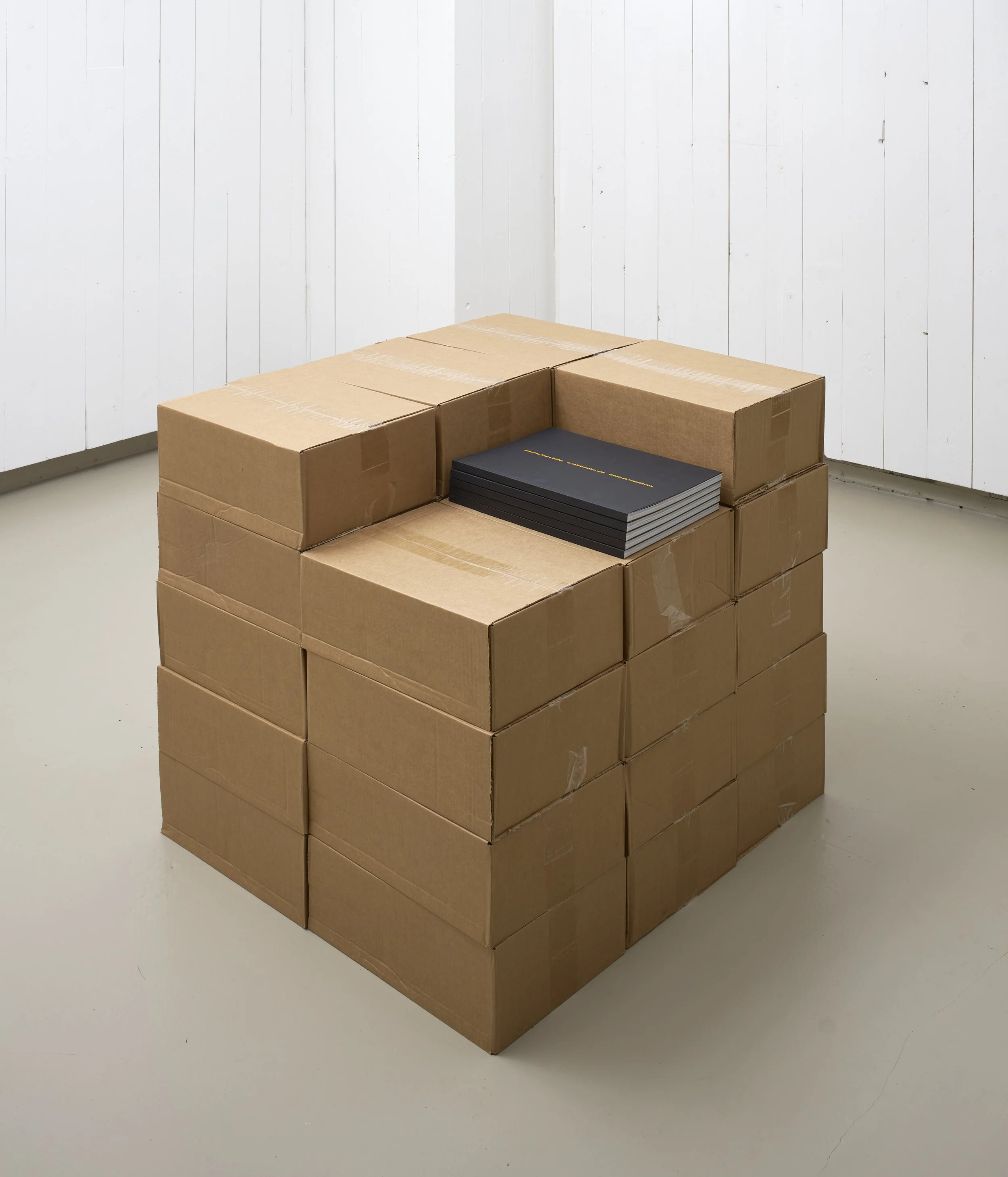
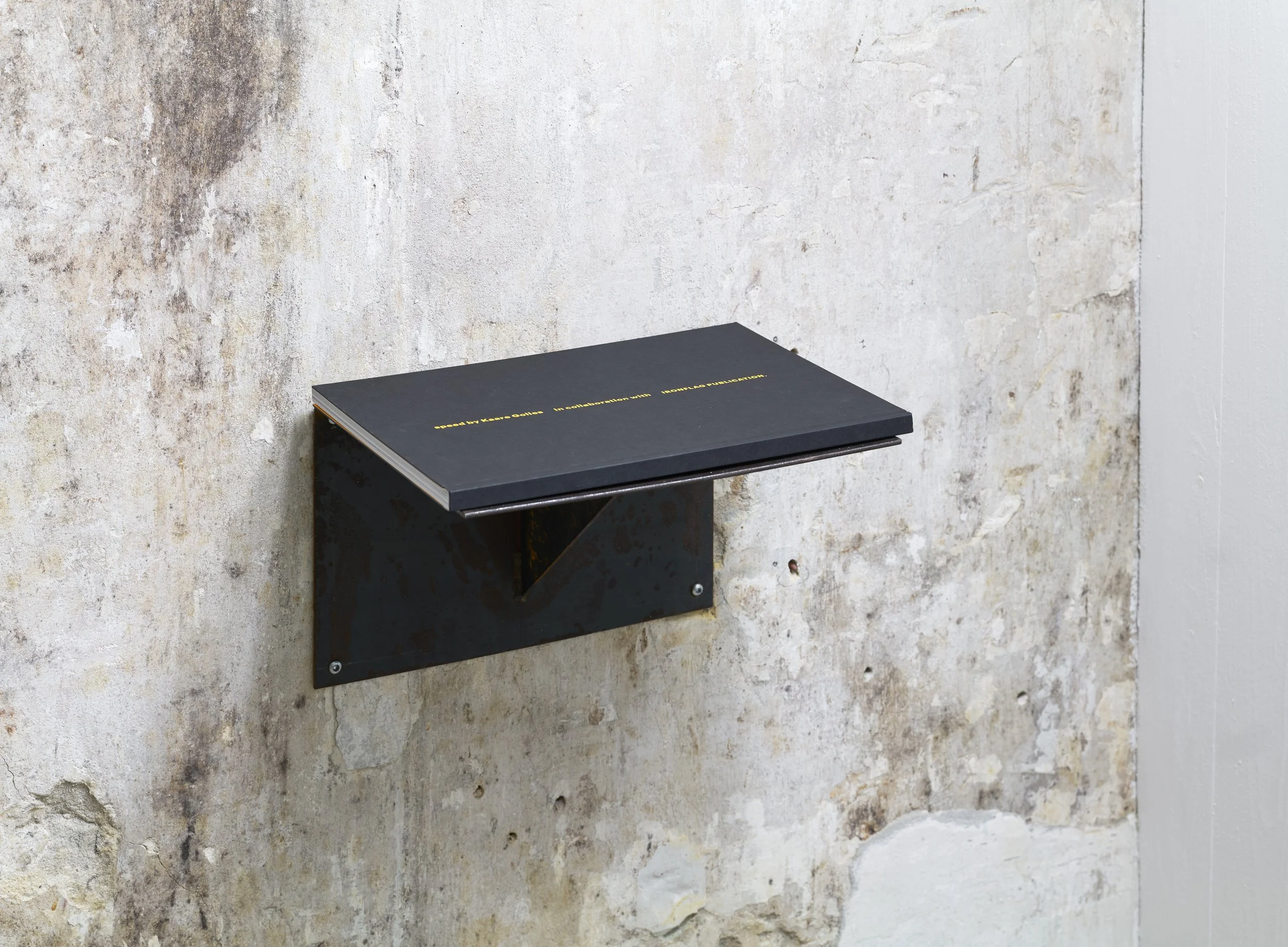
SPEED
Ironflag Publication
120 pages
ISBN:978-87-995419-9-7
2026
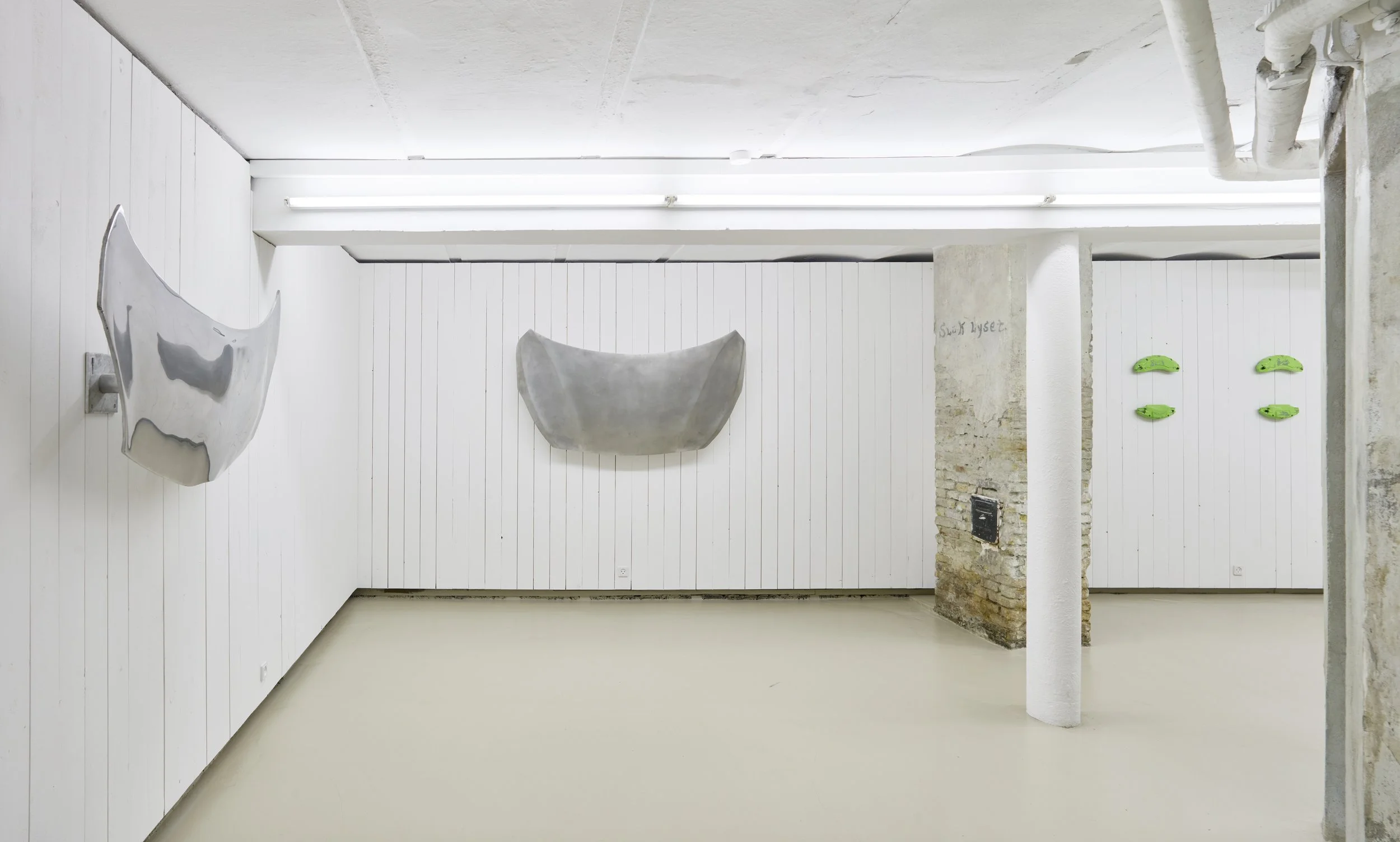
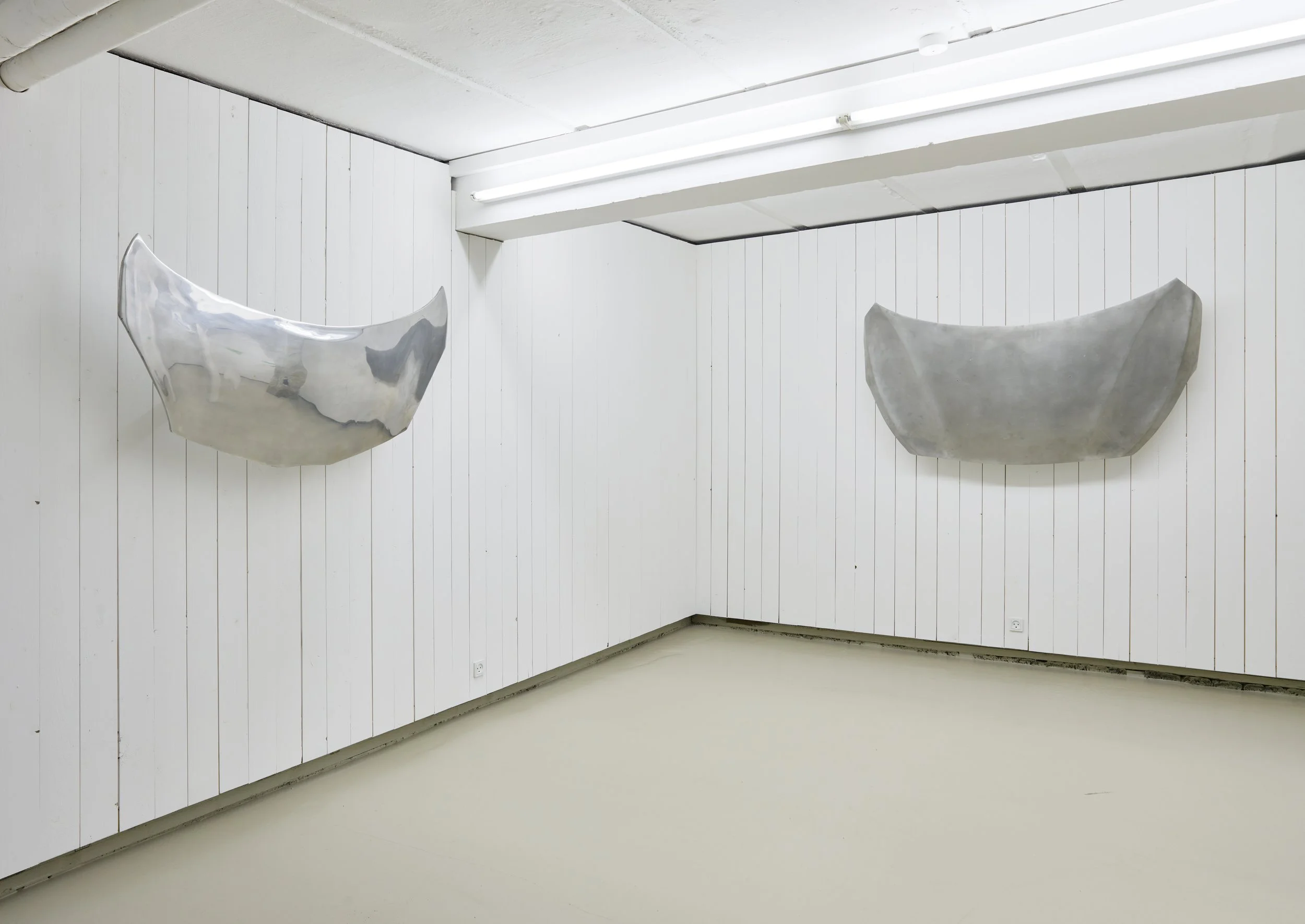
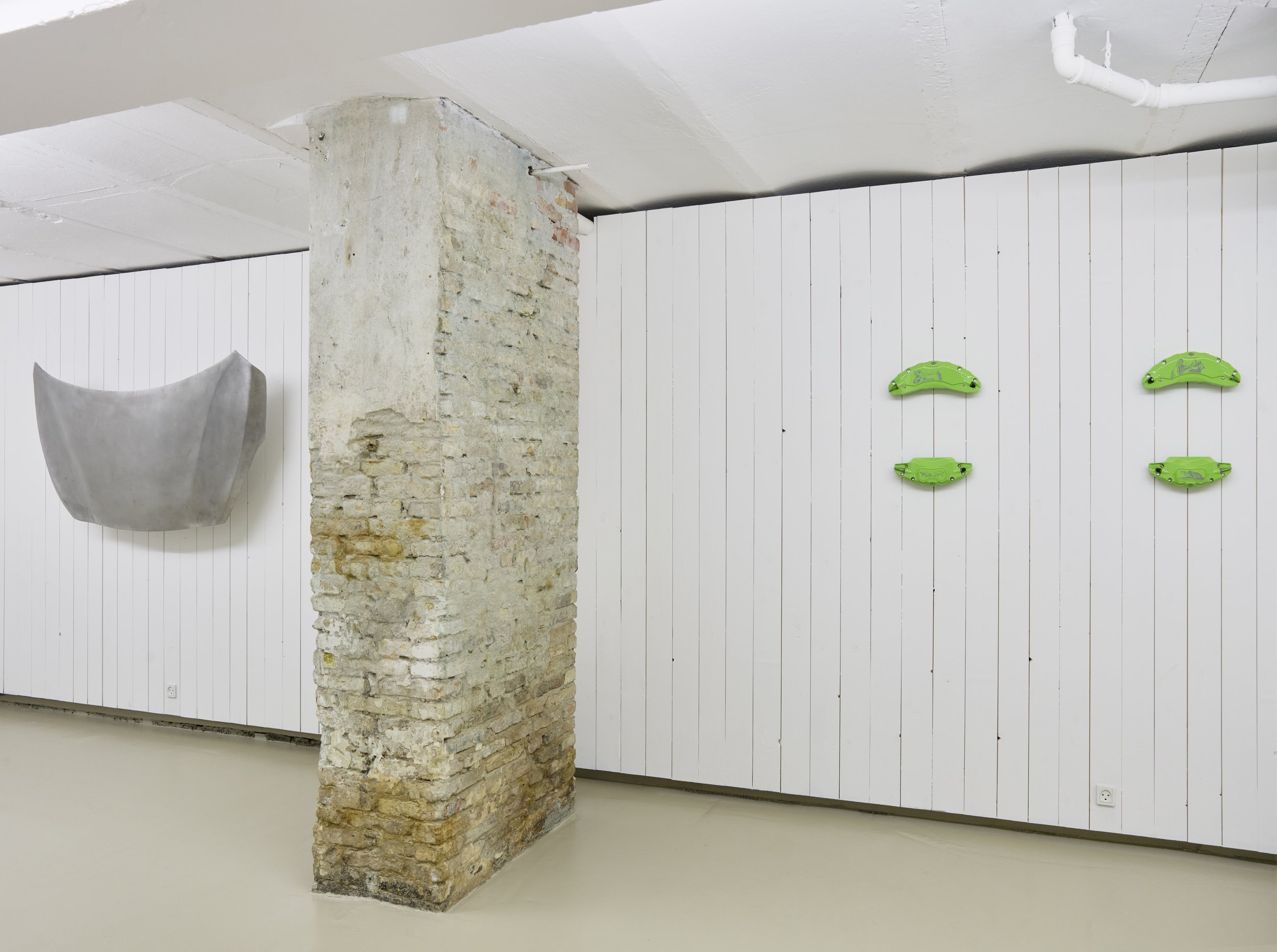
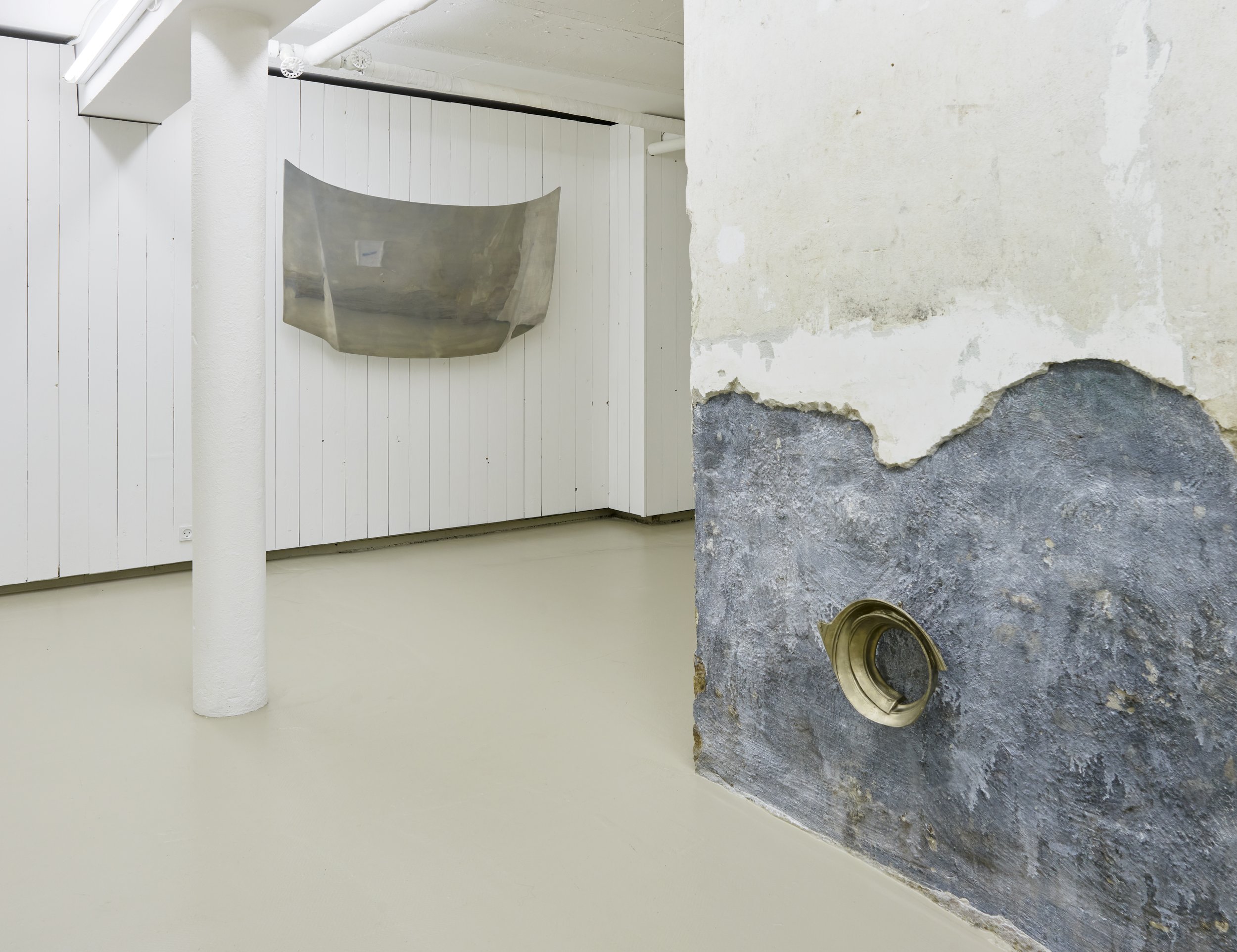
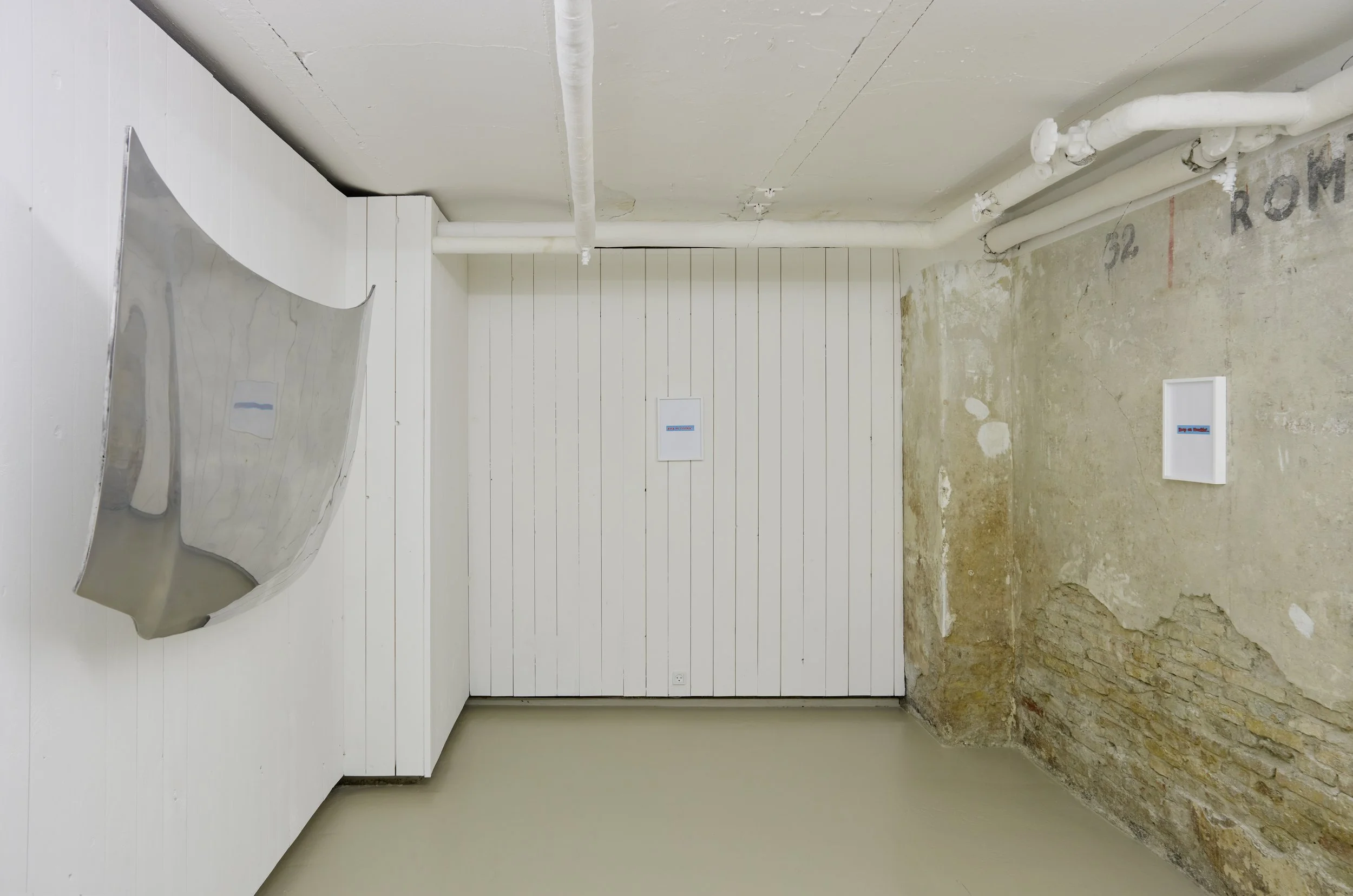
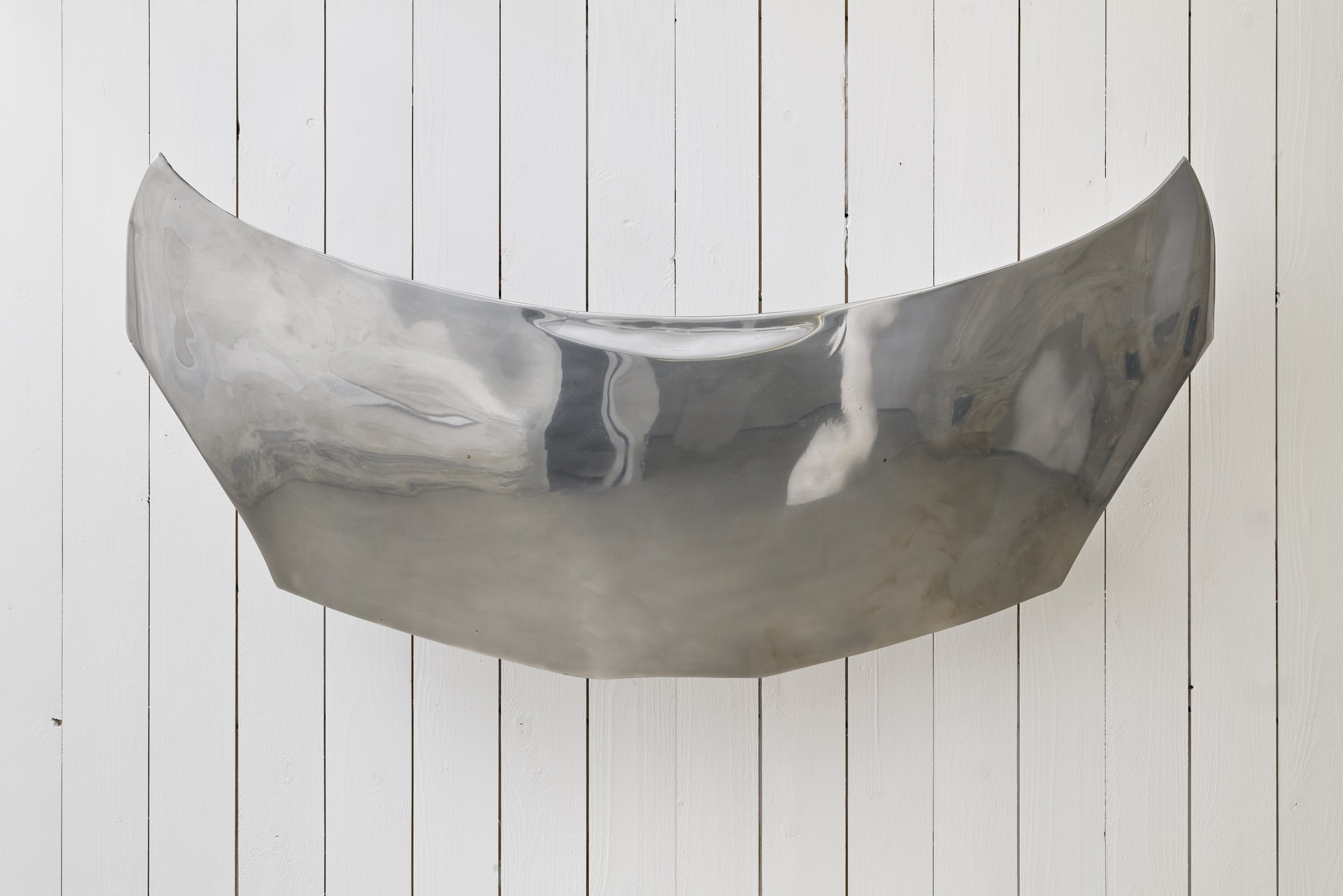
FOSSIL (Toyota), 2023
Cast and polished aluminium
55 x 135 x 30 cm
FOSSIL (Kia), 2023
Cast and satinated aluminium
82 x 153 x 30 cm
FOSSIL (VW), 2023
Cast and polished aluminium
95 x 144 x 30 cm
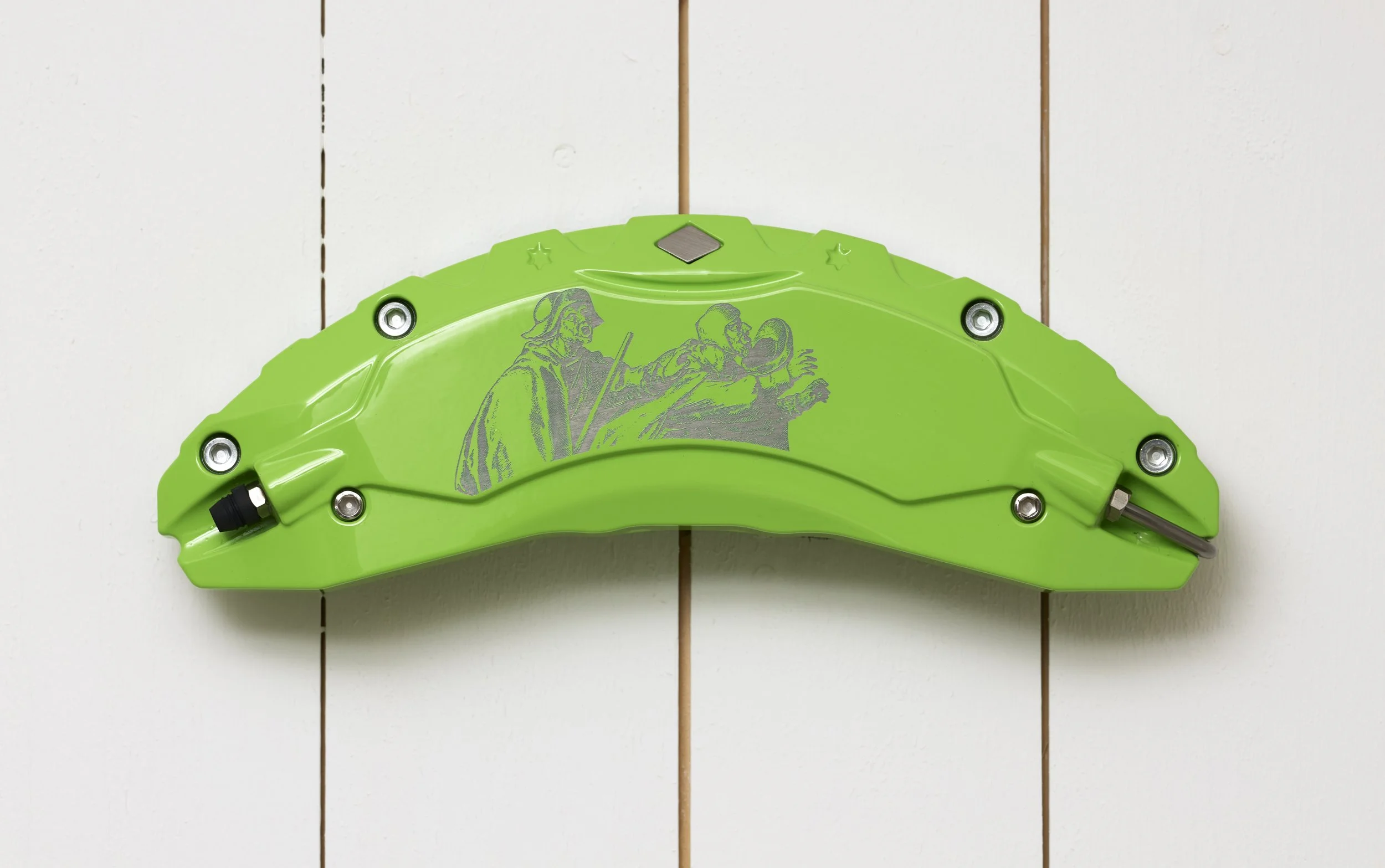
STEROID (The Blind Leading the Blind), 2026
Tesla brake caliper cover with engraving
32 x 11 x 6.5 cm
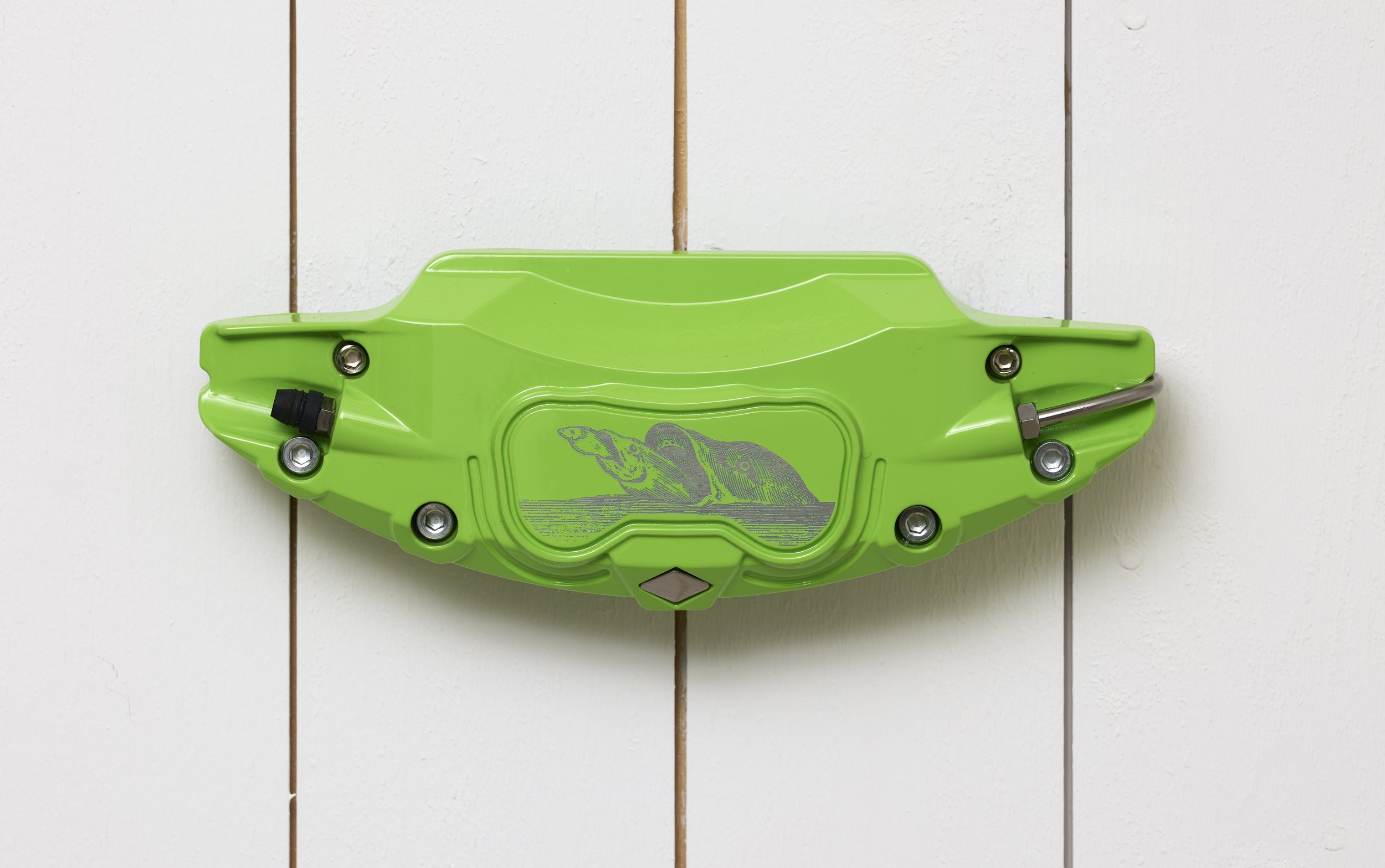
STEROID (The Big Fish Eat the Little Fish), 2026
Tesla brake caliper cover with engraving
27 x 10 x 5.5 cm
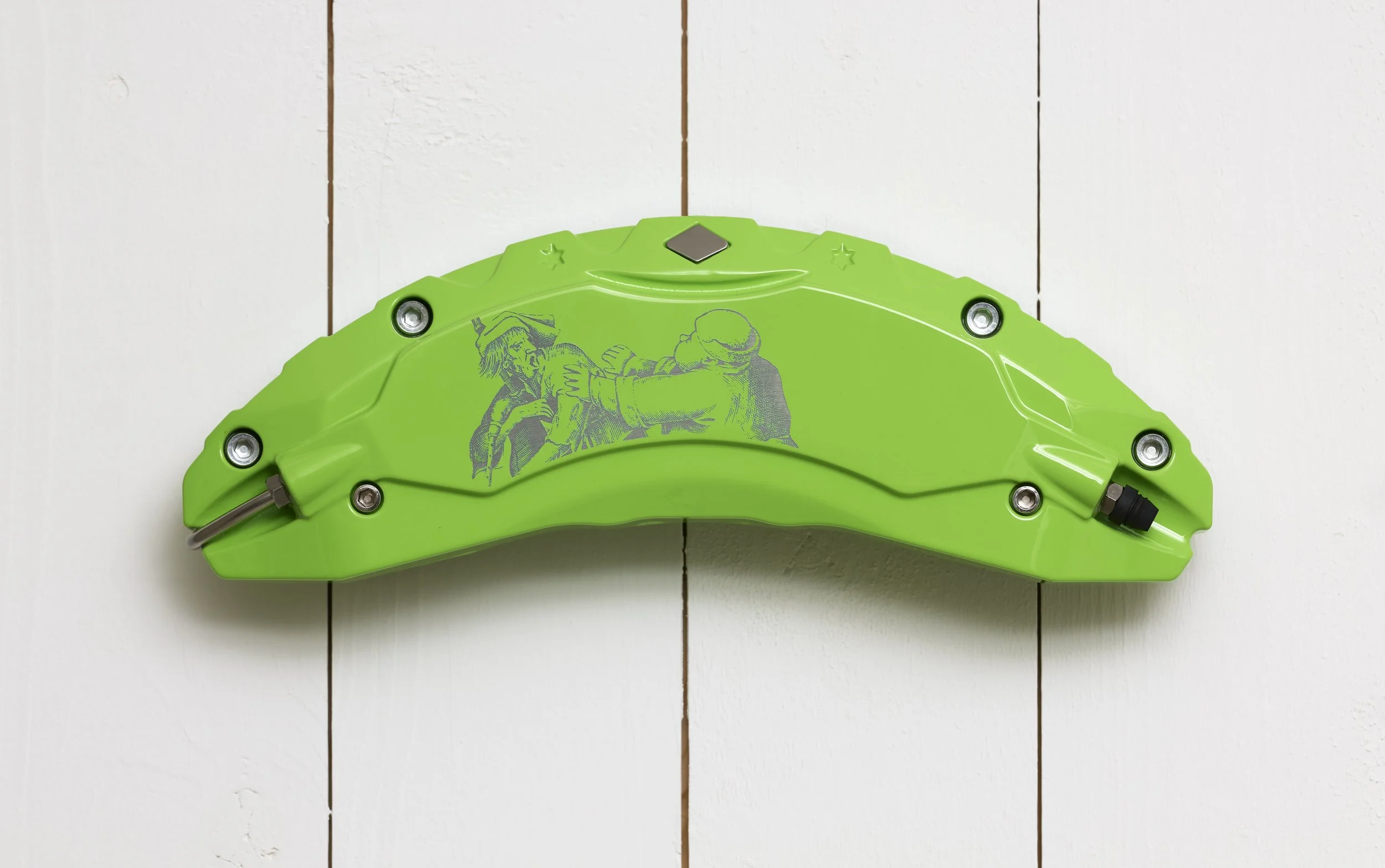
STEROID (The Fat Kitchen), 2026
Tesla brake caliper cover with engraving
32 x 11 x 6.5 cm
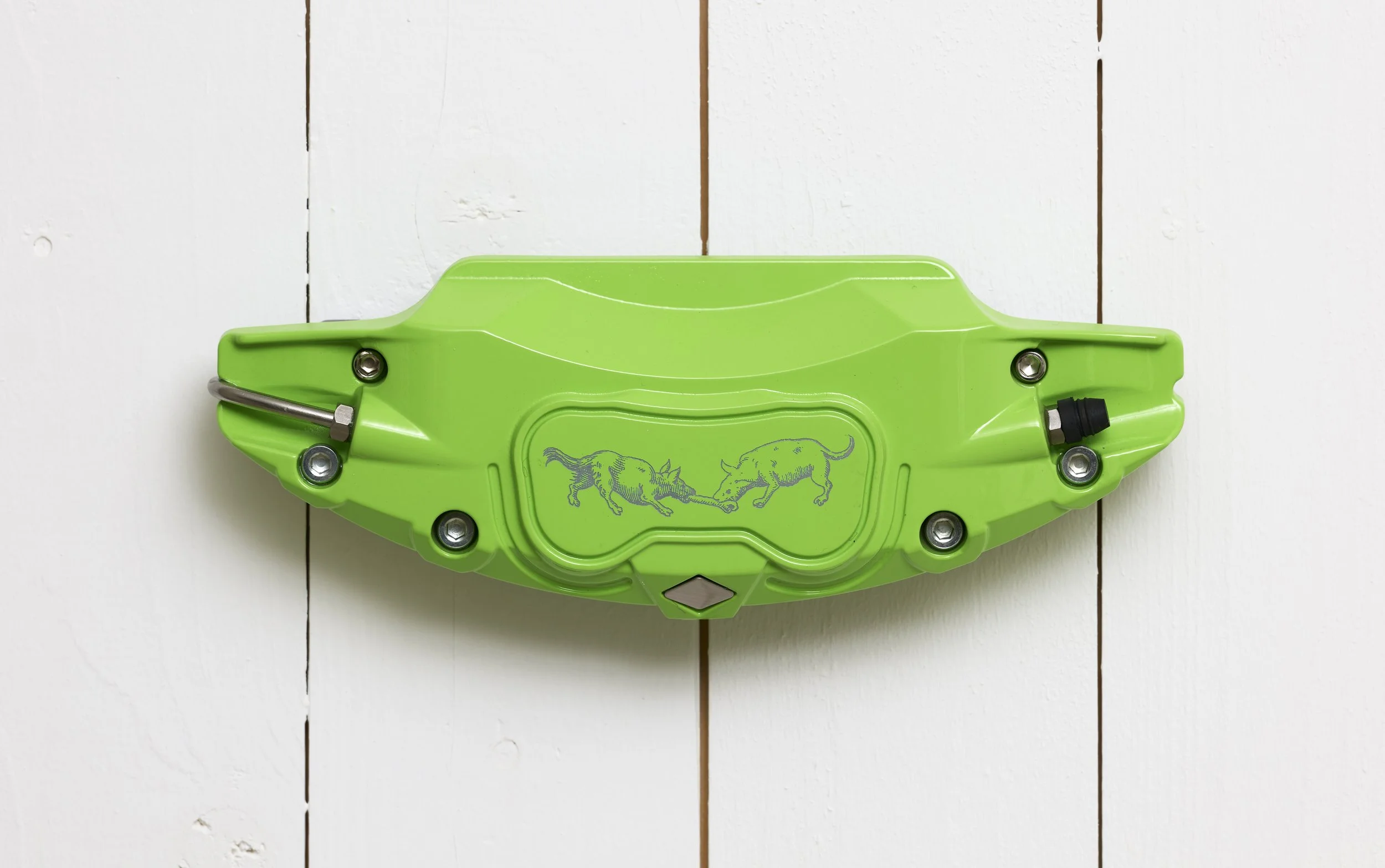
STEROID (Envy), 2026
Tesla brake caliper cover with engraving
27 x 10 x 5.5 cm
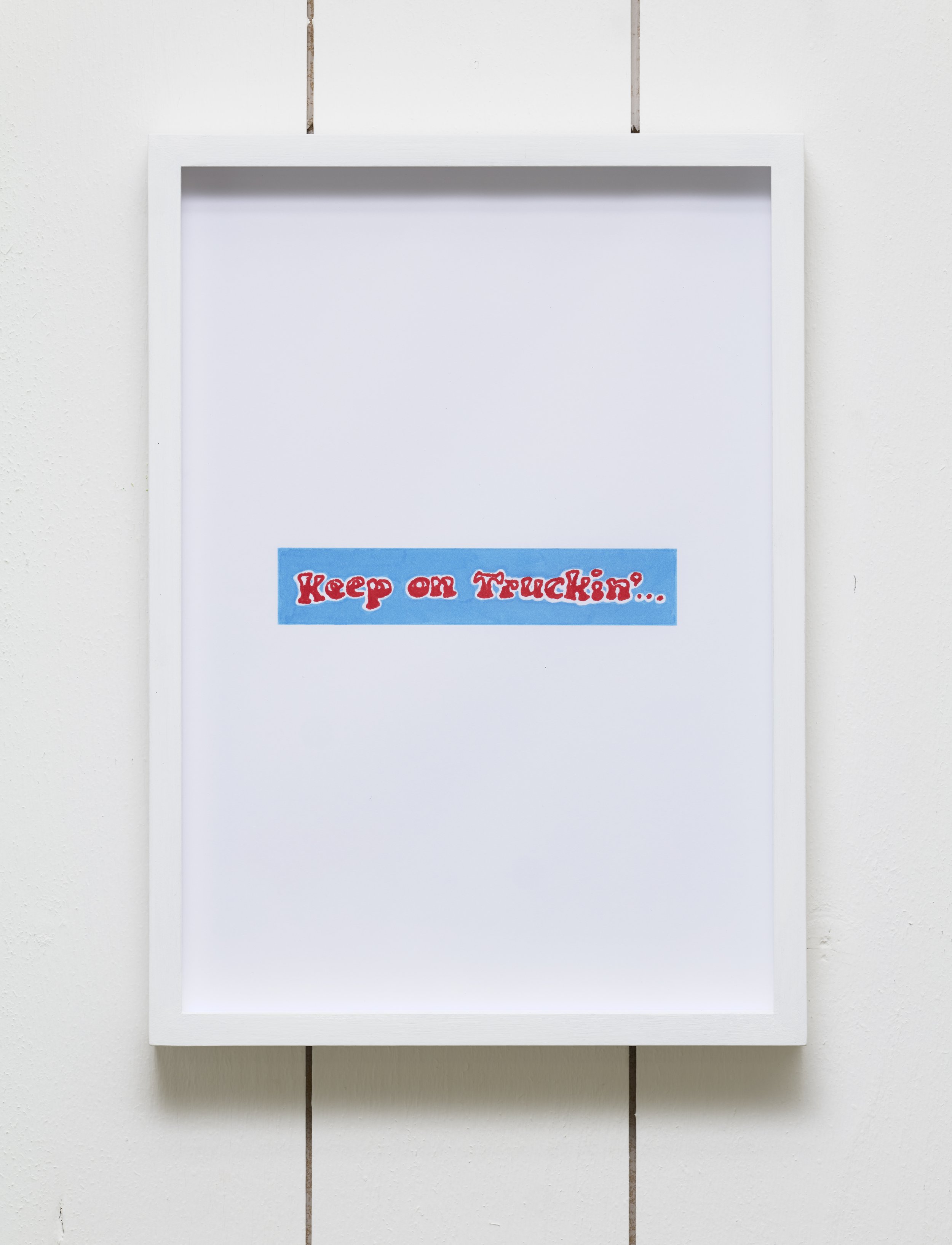
Keep on Truckin', 2026
Marker on Canson XL 70gr
29.7 x 21 cm
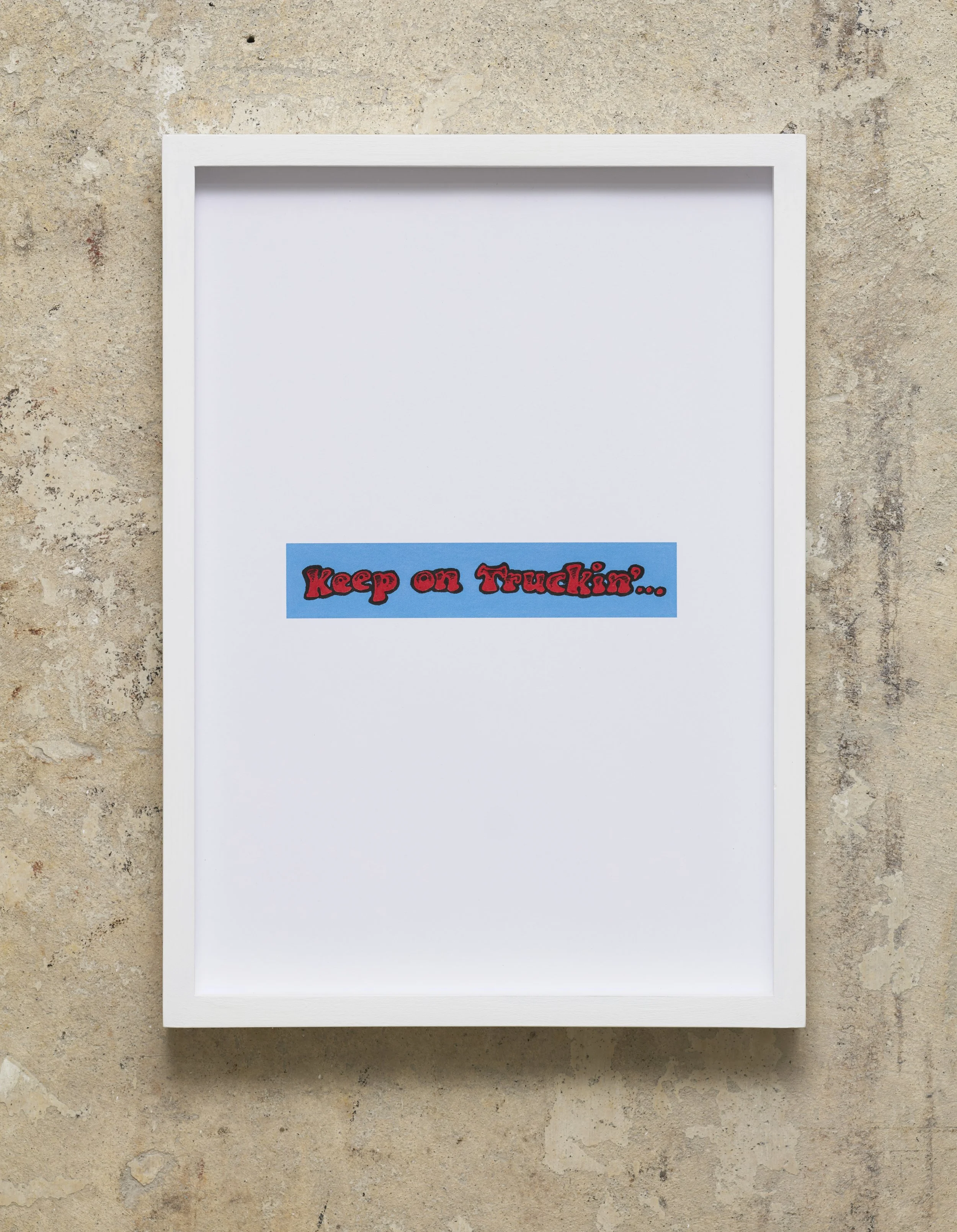
Keep on Truckin', 2026
Marker and colour pencil on Canson XL 70gr
29.7 x 21 cm
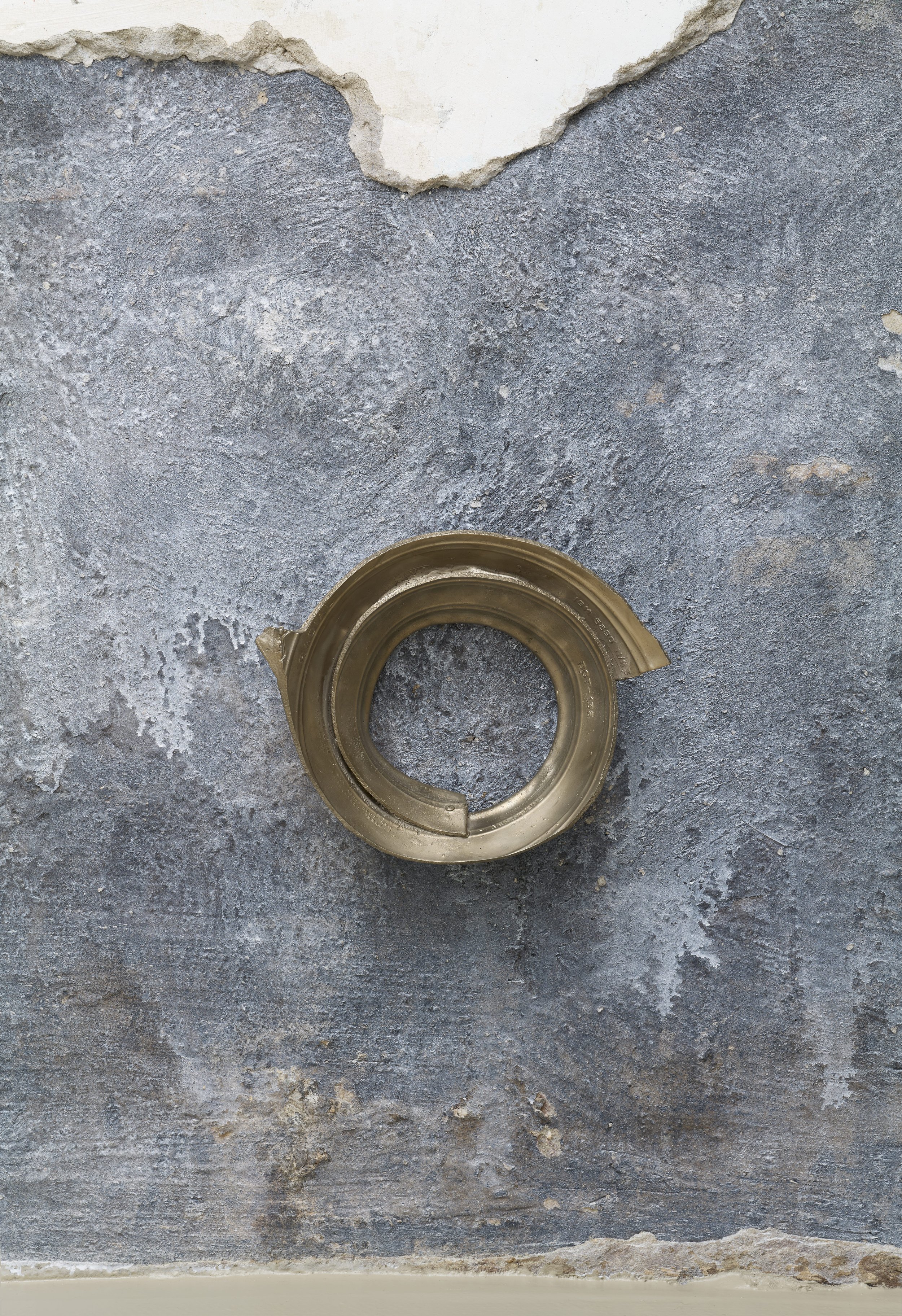
FOSSIL (Michelin), 2023
Silver bronze
30.5 x 24.5 x 11 cm
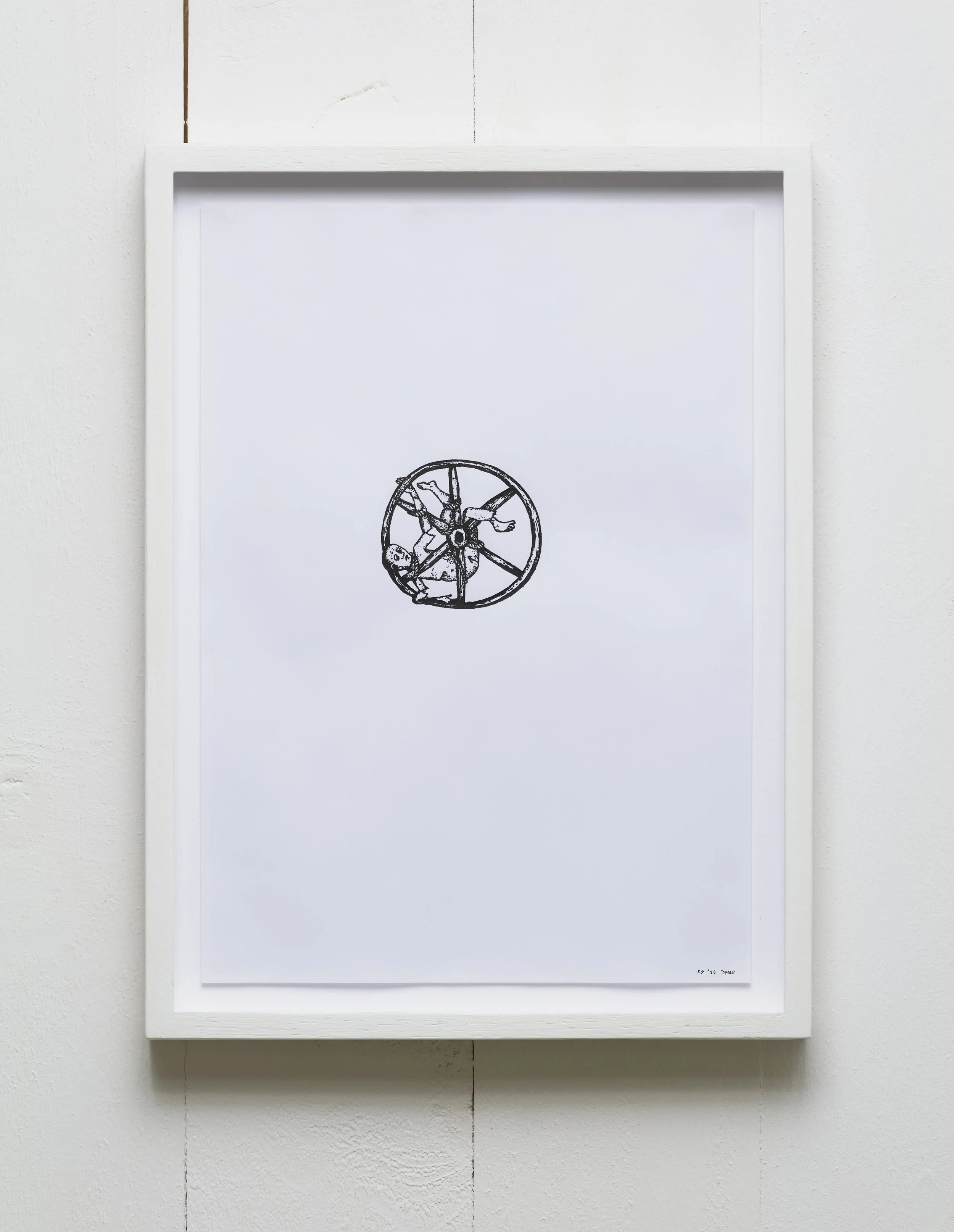
SPEED, 2025
Marker on Canson XL 70gr
32.7 x 24 cm
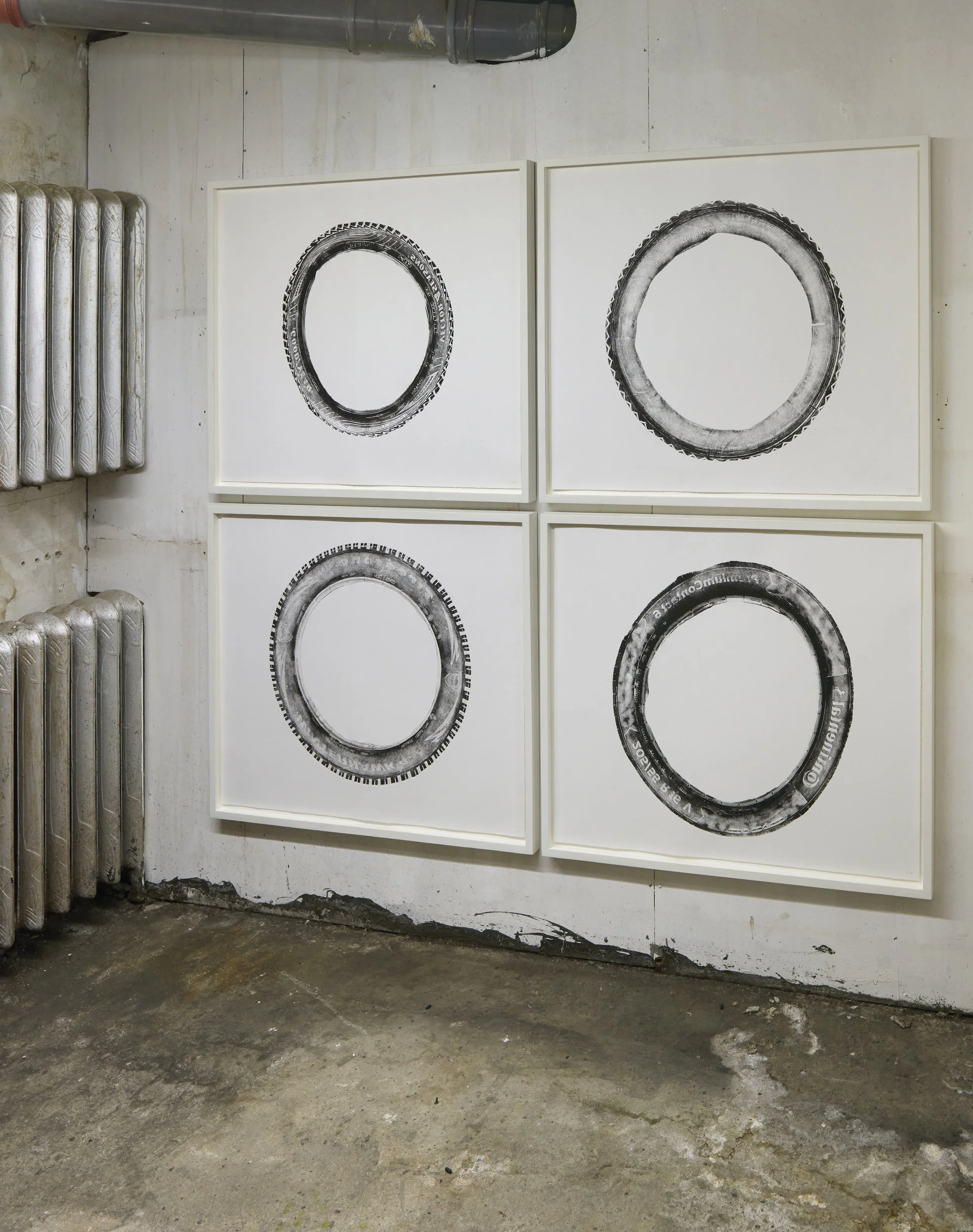
FOSSIL (Firestone), 2025
Monoprint on Somerset White Satin 300gr
Ed. 1/1
77,5 x 94,5 cm
FOSSIL (Michelin), 2025
Monoprint on Somerset White Satin 300gr
Ed. 1/1
77,5 x 94,5 cm
FOSSIL (Continental), 2025
Monoprint on Somerset White Satin 300gr
Ed. 1/1
77,5 x 94,5 cm
FOSSIL (Goodyear), 2025
Monoprint on Somerset White Satin 300gr
Ed. 1/1
77,5 x 94,5 cm